
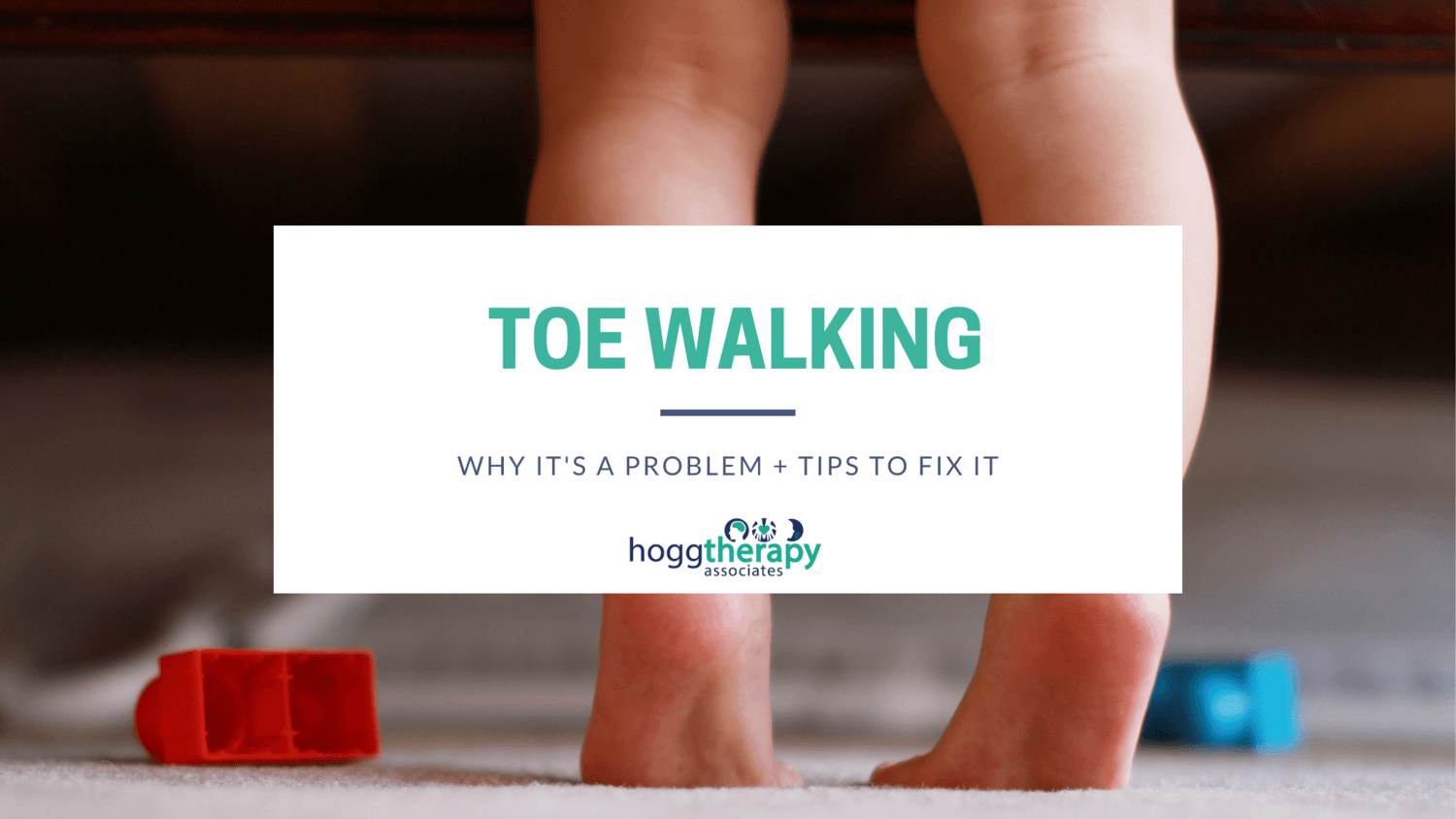
Toe Walking: Why It’s a Problem + Tips to Fix It
This is a subtitle for your new post
Taylor Adkins, DPT
Kids twirling down the sidewalk on their tippy toes and leaping into the air while dreaming of the day they become a ballerina is a sight most of us are familiar with. However, there seems to be kids who are always pretending to be a ballerina without being able to help it. When kids are walking on their toes and they don’t seem to be able to control it, physical therapy is often recommended. I often get questions about toe walking: why is it a problem, how big of a problem is it, how long does it take to fix, and will it fix itself are just a few examples.
Why It’s a Problem
Toe walking consistently is a problem for children because it can lead to changes in foot position which can cause pain later in life. It can also cause muscle tightness and problems with balance. To answer the question of how serious of an issue toe walking is—it all depends on why a child is toe walking. The three most common reasons kids toe walk are: sensory concerns, idiopathic, and tight gastrocnemius (calf) muscles.
Reasons for Toe Walking
If a child is toe walking due to sensory concerns, often they like the feeling of “locking out” their ankles or it helps them avoid textures on their heels that they don’t like. Having your child walk barefoot on different textures can be a way to help them become used to it which may decrease how much they toe walk. Idiopathic toe walking is a diagnosis for kids who toe walk just because. There’s no rhyme or reason as to why they toe walk. These kids don’t have sensory concerns and they don’t have tight leg muscles limiting their motion—it’s just a habit they have.
For both idiopathic toe walking and toe walking due to sensory concerns, it is common for some children to “grow out” of toe walking as they become older since they are now stronger and have been exposed to more things like walking in the grass. Some kids may not “grow out” of it but they have learned how to manage walking and running so they do not trip and fall down. There is conflicting research about how many kids will grow out of it or not. However, these children could start to develop tight leg muscles due to their habit of toe walking which could contribute to more toe walking.
If a child is toe walking because their gastrocnemius (calf) muscles are too tight, physical therapy is definitely recommended. When calf muscles are too tight, this limits a child’s ability to move their ankle through a full range of motion, especially into dorsiflexion. Dorsiflexion is when you move your foot upwards like in heel walking. This is the main motion used for that first step during walking as well. If a child does not have full dorsiflexion then they may trip on their toes as they are not able to lift their toes off the ground enough. This can also affect how a child gains leg strength as they are using their leg muscles in a different way than they would typically.
If a child spends too much time on their toes since their muscles are too tight to allow them to stand on flat feet, then there is often a change in how their foot bones grow to accommodate for extra pressure in their toes. Sometimes, this change in foot alignment can lead to pain later in life. In physical therapy for tight calf muscles, a stretching program will be provided as well as working on other functional skills that incorporate their dorsiflexion and leg strength, such as walking up and down stairs. If you are unable to walk up stairs with your feet flat then you are more likely to trip.
How to Fix Toe Walking
If you have questions or concerns about your child toe walking, it is best to receive a physical therapy evaluation. This would allow the PT to provide a thorough evaluation to see if a child is toe walking due to tight gastrocnemius muscles, sensory concerns, or idiopathic toe walking. It also allows the PT to make sure your child is doing everything else appropriate for their age. Please give Hogg Therapy Associates a call at 859-353-3666 to discuss a PT evaluation or screening.
While you are waiting for your evaluation, here are some tips and tricks of how to decrease how often your child is toe walking!
- Give verbal clues
- Often repeating phrases such as “flat feet” or “walk on your heels” is helpful to remind kids to place their heels on the ground as they walk to help break their habit.
- Practice heel walking
- Heel walking is where you lean back to fully weight bear on your heels and your toes are off the ground.
- Deep squats
- Squatting low to pick up toys or heavy items is a great way to improve weight bearing through heels which can improve a child’s tolerance to placing weight on their heels during functional movements.
- Calf stretching
- Stretch both gastrocnemius muscles frequently for 30-60 seconds, especially if your child toe walks constantly.
- Exercise #1: Standing on a ramp with their feet straight and flat. You can even do this stretch on a step with their heels off the back of the step—just be careful they don’t lose their balance and fall.
- Exercise #2: Provide a gentle but firm push against your child’s toes and ball of foot towards their head when they are laying down.
- Exercise #3: Sit on a stool to lean forward for toys. When your child sits on a stool and leans forward, that pushes their ankle into dorsiflexion. When they hold that dorsiflexion position to play with their toy, then they are creating a stretch in their gastrocnemius muscle.
For more information about the services we offer, please visit our website at HoggTherapy.com or give us a call at 859-353-3666.







![We’ve loved seeing your stories roll in over the past couple weeks and wanted to share one of our own, thanks to therapists Lauren & Maya and their friend Tiffany. ❤️
Last week, OT Ms. Lauren and ST Ms. Maya accompanied Tiffany on a HUGE adventure, attending the Special Needs Camp of Kentucky for activities, friendship, and growth ? Headquartered in Bath County, SNCKI is free to attend, with nearly 100 campers enrolled this year! Ms. Lauren shared her thoughts with the HTP team when she got home: “The other campers welcomed [Tiffany] with open arms, and she made so many new friends…A space where 76 teens/adults with disabilities of all kinds were free to just be them and make those connections with each other while having tons of fun. We have had moments that were trickier to navigate, but we did it together.”
One of the nights was family and community night, featuring a group dance and a talent showcase. ?Lauren said, “The amount of love and support in the gym was out of this world. For her mom to see that, to know that we’ve got her girl no matter what, means more than any treatment code or note I could ever write. She is already asking when she gets to come back…and even told her mom to ‘buy a new house at camp’? If you are not already, follow Special Needs Connections of Kentucky, Inc on facebook. They are doing such AMAZING things for our community here and deserve so much support.” ? We couldn’t agree more!
Therapy isn’t about treatment codes, billable hours, documentation, or recertification. It’s about the meaningful moments and the love we pour into these children every single day. This is why Hogg Therapy exists—to give every child the opportunity to experience a meaningful, joyful life. ✨ Thank you, Lauren and Maya for your support both in and outside of the clinic and for sharing this story! ?](https://scontent-iad3-1.cdninstagram.com/v/t51.82787-15/747807719_18212073508337241_9129116297997701917_n.jpg?stp=dst-jpg_e35_tt6&_nc_cat=108&ccb=7-5&_nc_sid=18de74&efg=eyJlZmdfdGFnIjoiQ0FST1VTRUxfSVRFTS5iZXN0X2ltYWdlX3VybGdlbi5DMyJ9&_nc_ohc=F0g-psphO9wQ7kNvwG6cjtr&_nc_oc=AdooTL3jmLfxR8RFPNMHr9s15L1C3GZnOdoM1JJD1pqvMgSXKIUVnUVNFwB_Ot6qIzQ&_nc_zt=23&_nc_ht=scontent-iad3-1.cdninstagram.com&edm=ANo9K5cEAAAA&_nc_gid=Gj5PDroKoiMO58CJo8-RkQ&_nc_tpa=Q5bMBQJOdKyG0Vel41HSeTXzmdw6mR6W2r3wFileLsizsXNs-UwBXEDw5cJ9RmB8AMVZ6PS0didIRAyl5A&oh=00_AQMCJA-lsEih5NXwrt7EMKNb32tfhoBxMjeGXyzW6ig6qg&oe=6AC46B0A)


![We’re sharing an occupational therapy success story from OT Mrs. Abby today! ? Meet Grayson! When he first started occupational therapy, everyday life felt hard. He was experiencing significant picky eating, struggled with daily routines and transitions, and had a difficult time managing big emotions.
Since then, Grayson has put in so much hard work. Through OT, he has built confidence, strengthened his self-regulation skills, and learned to take on new and challenging tasks with courage. Every small step has added up to something truly amazing! One of the biggest reasons for Grayson’s success has been the incredible partnership with his parents. They fully embraced therapy beyond the clinic by consistently practicing strategies at home through his Home Exercise Program (HEP). Their dedication, encouragement, and willingness to try new approaches have made all the difference.
Today, Grayson is trying new foods every week, navigating daily routines with greater independence, and enjoying more successful, joyful moments with his family. His growth is a wonderful reminder of what can happen when a determined child, committed caregivers, and a supportive therapy team work together.
?Congratulations, Grayson! We are so proud of everything you’ve accomplished, and we’re celebrating your amazing parents, too. Your hard work, perseverance, and teamwork are inspiring! ?
[This story & all photos shared with parent permission ??] #occupationaltherapy #hoggtherapypediatrics #hoggtherapy #feedingtherapy](https://scontent-iad6-1.cdninstagram.com/v/t51.82787-15/742695277_18211398901337241_3568386461214310976_n.jpg?stp=dst-jpg_e35_tt6&_nc_cat=100&ccb=7-5&_nc_sid=18de74&efg=eyJlZmdfdGFnIjoiQ0FST1VTRUxfSVRFTS5iZXN0X2ltYWdlX3VybGdlbi5DMyJ9&_nc_ohc=PqSt0p8DiMYQ7kNvwEkdskS&_nc_oc=AdrpXV66N2ccYIxlqC5O8-coUizXDrfpi89jxlJkbuPQl07kJOmnuUVKAybGnxDRGdU&_nc_zt=23&_nc_ht=scontent-iad6-1.cdninstagram.com&edm=ANo9K5cEAAAA&_nc_gid=Gj5PDroKoiMO58CJo8-RkQ&_nc_tpa=Q5bMBQLxovNb4uqv0Ee2jcNLwa1aONLPPlHe6gKR0NH7h7t7aq7ogHPrkUhpCYSwh4xl5jN-rzLhzKKj5A&oh=00_AQPUNiCTQhSr87oim5hYq7YZlOuQ7ptcYAU0o0oazPjbwQ&oe=6AC4498E)