HEP Who?!
By: Brittany McKnight, MS OTR/L
"HEP" who? get to know them!
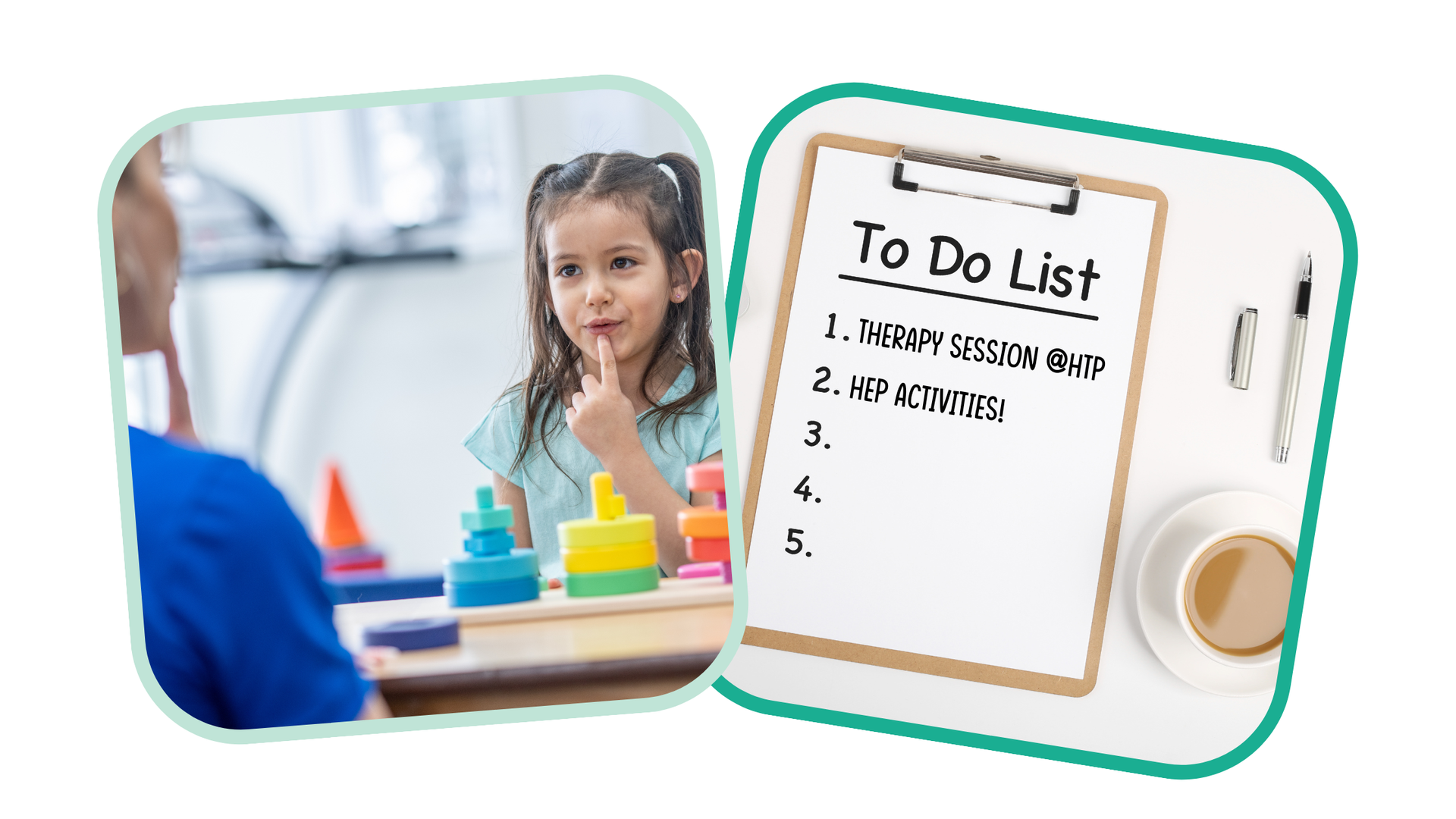
If you ever hear your therapist say the words "HEP goal" or "HEP activities," and you’ve thought “Who or What is that?” Then this is the short read for you! In Outpatient Therapy, specifically Occupational Therapy, Physical Therapy, and Speech Therapy in this case, therapists are required to implement Home Exercise Programs, or HEPs. Before you decide that there is not enough time in the day to add exercise at home on top of all of the childcare, paid work, non-paid work, and other duties you have as a Caregiver, hear me out!
how does an hep work?
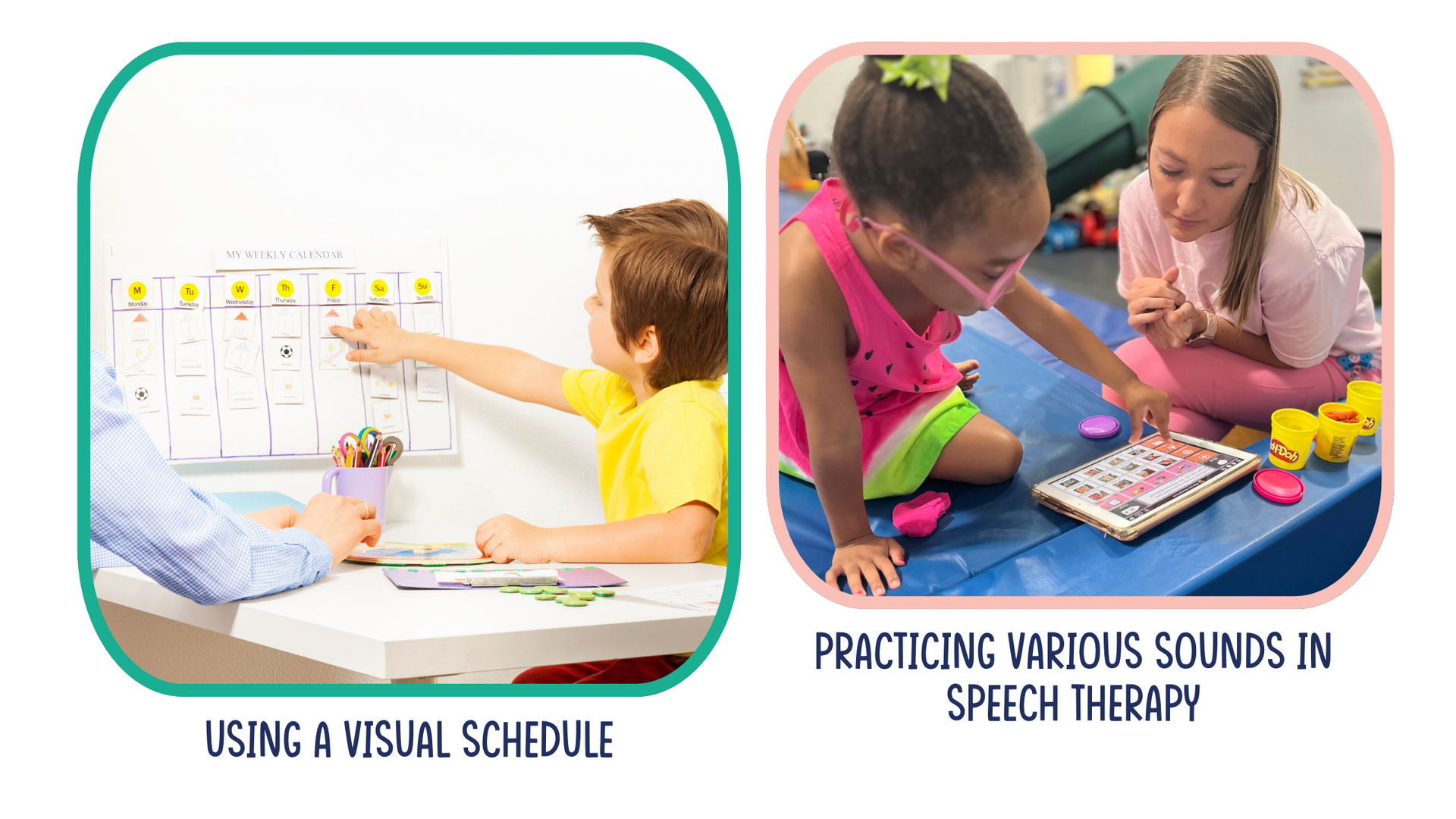
A Home Exercise Program (HEP) is built between therapists and the client/caregiver to implement strategies and techniques learned in skilled therapy sessions in the natural contexts of home and in the community. It can be something more simple, like, “practice saying words with the S sound,” to something more complex, such as, “let’s try a visual schedule to help prevent transition related anxiety.” The HEP is one of the most important aspects of your child’s therapy journey, because it ensures that your child practices and carries over the skills they learn in the clinic setting. Without use of the HEP, progress towards goals will be slower, and it will be much harder for the child to generalize the skills to the places they have the biggest barrier. The top reason the HEP is essential is because of Neuroplasticity.
more about NeuroPlasticity
Neuroplasticity
is the brain’s ability to reorganize itself by forming new neural pathways and connections throughout life (Pathways.org). When we learn new skills, our brain starts building new connections, and is shaped and molded based on these connections that we practice and learn. If we learn something new, but do not practice it, then the brain will eventually forget it or file it under ‘unimportant’ in your memory. The purpose of attending therapy is to progress towards goals that will benefit the client and make their life easier and better. Attendance at the therapy sessions will help initiate new learning, and completing the HEP between sessions will ensure that Neuroplasticity will grow. If the brain does not use it, it will lose it. New skills should be practiced 24-48hrs after being initially taught for optimal learning growth.
how to integrate an HEP into daily life
Now that we know who HEP is, and why they are important, Let’s get into the How. You might ask, "How can I do all of this extra teaching to my child when I have negative hours in the day to do it? My child does not listen to a word I say and hates doing homework/exercise so how is this going to work?" The answer is easy…work with your child’s therapist. As therapists, we are here to support your child on their therapy journey to meet their goals. We will work with you on integrating the HEP into your typical daily routine and will check in every session for feedback to modify it as needed. We can make it as simple or as complex as it needs to be, problem-solve which strategies work and do not work, and try to make it a comfortable fit for child and family needs.
Let this knowledge sink in, and if you are a client or caregiver, shock your therapist by asking about HEP in the next session. If you are a therapist, I hope this inspires you to work with your families closer to help your clients crush their goals.
How we can Help
If you want to learn more about HEPs, our therapists may be able to help! Give us a call at 859-353-3666!




![We’ve loved seeing your stories roll in over the past couple weeks and wanted to share one of our own, thanks to therapists Lauren & Maya and their friend Tiffany. ❤️
Last week, OT Ms. Lauren and ST Ms. Maya accompanied Tiffany on a HUGE adventure, attending the Special Needs Camp of Kentucky for activities, friendship, and growth ? Headquartered in Bath County, SNCKI is free to attend, with nearly 100 campers enrolled this year! Ms. Lauren shared her thoughts with the HTP team when she got home: “The other campers welcomed [Tiffany] with open arms, and she made so many new friends…A space where 76 teens/adults with disabilities of all kinds were free to just be them and make those connections with each other while having tons of fun. We have had moments that were trickier to navigate, but we did it together.”
One of the nights was family and community night, featuring a group dance and a talent showcase. ?Lauren said, “The amount of love and support in the gym was out of this world. For her mom to see that, to know that we’ve got her girl no matter what, means more than any treatment code or note I could ever write. She is already asking when she gets to come back…and even told her mom to ‘buy a new house at camp’? If you are not already, follow Special Needs Connections of Kentucky, Inc on facebook. They are doing such AMAZING things for our community here and deserve so much support.” ? We couldn’t agree more!
Therapy isn’t about treatment codes, billable hours, documentation, or recertification. It’s about the meaningful moments and the love we pour into these children every single day. This is why Hogg Therapy exists—to give every child the opportunity to experience a meaningful, joyful life. ✨ Thank you, Lauren and Maya for your support both in and outside of the clinic and for sharing this story! ?](https://scontent-iad3-1.cdninstagram.com/v/t51.82787-15/747807719_18212073508337241_9129116297997701917_n.jpg?stp=dst-jpg_e35_tt6&_nc_cat=108&ccb=7-5&_nc_sid=18de74&efg=eyJlZmdfdGFnIjoiQ0FST1VTRUxfSVRFTS5iZXN0X2ltYWdlX3VybGdlbi5DMyJ9&_nc_ohc=VBDIOGhctdYQ7kNvwGvwnw8&_nc_oc=Ado00Jqs7BI0WjvHEs2RDwwSmJhhKcUPSXyQVjwp7nUkakF1g8UEFyCYcI3s7QVPf9w&_nc_zt=23&_nc_ht=scontent-iad3-1.cdninstagram.com&edm=ANo9K5cEAAAA&_nc_gid=ixshs2ZAWZHo3N1vrgWggw&_nc_tpa=Q5bMBQIiJEVn4MVrSrCX1-lYI09BvNviDWMt3-ml276SVKaA4hsmkPbhx_HcgNUSJJCQIzB8TIzyMhwqhw&oh=00_AQOplbNqr1a5jv5oCzq_ug19VyQBwkFSOBaqVRtc5Tn_cQ&oe=6AC9E94A)


![We’re sharing an occupational therapy success story from OT Mrs. Abby today! ? Meet Grayson! When he first started occupational therapy, everyday life felt hard. He was experiencing significant picky eating, struggled with daily routines and transitions, and had a difficult time managing big emotions.
Since then, Grayson has put in so much hard work. Through OT, he has built confidence, strengthened his self-regulation skills, and learned to take on new and challenging tasks with courage. Every small step has added up to something truly amazing! One of the biggest reasons for Grayson’s success has been the incredible partnership with his parents. They fully embraced therapy beyond the clinic by consistently practicing strategies at home through his Home Exercise Program (HEP). Their dedication, encouragement, and willingness to try new approaches have made all the difference.
Today, Grayson is trying new foods every week, navigating daily routines with greater independence, and enjoying more successful, joyful moments with his family. His growth is a wonderful reminder of what can happen when a determined child, committed caregivers, and a supportive therapy team work together.
?Congratulations, Grayson! We are so proud of everything you’ve accomplished, and we’re celebrating your amazing parents, too. Your hard work, perseverance, and teamwork are inspiring! ?
[This story & all photos shared with parent permission ??] #occupationaltherapy #hoggtherapypediatrics #hoggtherapy #feedingtherapy](https://scontent-iad6-1.cdninstagram.com/v/t51.82787-15/742695277_18211398901337241_3568386461214310976_n.jpg?stp=dst-jpg_e35_tt6&_nc_cat=100&ccb=7-5&_nc_sid=18de74&efg=eyJlZmdfdGFnIjoiQ0FST1VTRUxfSVRFTS5iZXN0X2ltYWdlX3VybGdlbi5DMyJ9&_nc_ohc=l9gaKO4RlmEQ7kNvwG4AQGz&_nc_oc=Adol61t67LO3d6a6WYIbaBDJBNGUkuBtDIQ0PxS9Ha_kgi7F21wrqn3CPUh5_HLFF5Y&_nc_zt=23&_nc_ht=scontent-iad6-1.cdninstagram.com&edm=ANo9K5cEAAAA&_nc_gid=ixshs2ZAWZHo3N1vrgWggw&_nc_tpa=Q5bMBQLrjyH4FtYbZOj2uLjAweRyfym0-fX_OkyB4yrH4ZIRpz3PhpgFQZ61L54inUtCusv1Ev0W9pDqJg&oh=00_AQPo--Qs2JF-74NRjb3YAfMa2FTqD0mG3TCjibJrDLXEFw&oe=6AC9C7CE)