The Power of Coloring
Coloring is more than just a fun activity, it is a powerful tool therapists use to help children build important developmental skills while keeping therapy engaging and playful. Coloring can support communication, movement, coordination, focus, and creativity all at the same time. Best of all, children often do not even realize how much they are learning because they are having fun!
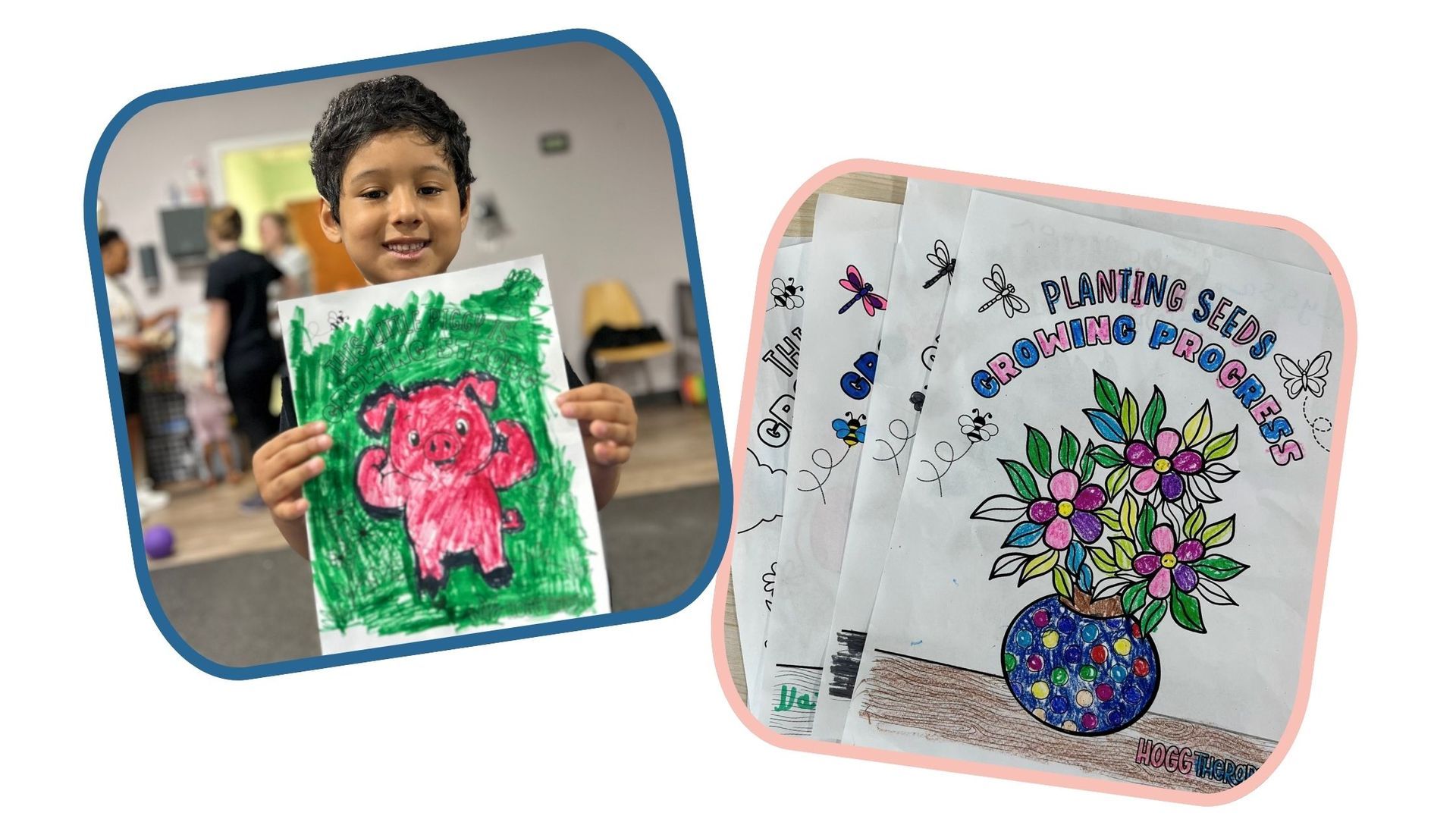
We recently hosted a coloring contest in our clinics, and the kiddos had so much fun showing their creativity!
At the end of this post, we've included
two coloring page designs
that you can download, print, and color at home or on the go!
Coloring in Occupational Therapy
Therapists use coloring activities to strengthen fine motor skills, improve visual motor integration, and support executive functioning skills like attention, direction following, and task completion.
Coloring helps children develop:
- Fine motor strength and endurance
- Pencil grasp and handwriting readiness
- Hand-eye coordination
- Visual motor integration
- Bilateral coordination
- Force grading (using the right amount of pressure)
- Attention and focus during seated tasks
- Social skills when coloring with peers or following guided instructions
Therapists may encourage children to color inside the lines, trace shapes, use broken crayons to promote stronger finger movements, or follow multi-step coloring directions. Coloring can also be adapted by placing pictures on a vertical surface like a wall or mirror to target shoulder strength, proximal control, and gross motor skills that support many daily activities.
Example: “Can you color the tiny stars without going outside the lines?”
Coloring in Physical Therapy
In physical therapy, coloring can become a movement-based activity that helps children improve posture, strength, endurance, and coordination. Sitting upright while coloring encourages core strength and body awareness, while reaching for crayons or coloring on vertical surfaces can strengthen shoulder and arm muscles.
Coloring can help support:
- Core strength
- Postural control
- Upper body strength
- Balance and coordination
- Endurance
Coloring can be a great way to strengthen the hand muscles, but did you know you can also make your whole body stronger while you color? Coloring in positions like hands and knees, on both knees, on one knee, or standing on an uneven surface (like a pillow) can make your shoulders, core, and legs stronger too! What a fun way to work out!
Physical therapists may also use coloring during obstacle courses, balance activities, or standing exercises to make movement more motivating and fun.
Example: “Let’s stand at the easel while we color our dinosaur picture!”
Coloring in Speech Therapy
Speech therapists use coloring to encourage communication, language development, and social interaction in a relaxed and playful environment. Coloring naturally creates opportunities for children to ask questions, make choices, describe pictures, follow directions, and practice conversation skills.
During coloring activities, children may work on:
- Vocabulary development
- Following directions
- Answering WH-questions
- Requesting items
- Storytelling and imagination
- Social communication
Example: “What color should we use next?” or “Tell me what is happening in your picture!”
free Coloring page download
Click the buttons to download a PDF version of two coloring sheets so you can print them as many times as you want! Have fun!
More Than Just Coloring
At Hogg Therapy, we believe children learn best through play, creativity, and meaningful experiences. Something as simple as coloring can help children build strength, coordination, communication, confidence, and independence while having fun at the same time.
Our occupational, physical, and speech therapists use engaging activities like coloring to help children reach developmental milestones in ways that feel exciting, motivating, and successful. From strengthening little hands to encouraging movement and conversation, every crayon stroke can support growth.
Big progress can come from simple moments, especially when therapy feels fun.
Want to learn how Hogg Therapy can support your child’s development? Contact us today at 859-353-3666 to learn more about our pediatric therapy services and how we help children grow through play-based therapy!