
Introducing Allergens to Your Baby: A Parent’s Guide to Safe, Early Food Introduction
By: Whitlie Rose-Stephens, OTR/L, CLC
Introducing allergens to your baby can feel intimidating, especially if there is a family history of food allergies. The good news is that current research provides clear guidance. This guide explains when to introduce allergens, which foods to start with, and how to do it safely using evidence-based practices.
Why Early Allergen Introduction Matters
Current research strongly supports early allergen introduction as a way to help reduce the risk of developing food allergies. Studies have shown that introducing allergenic foods around the time babies start solids and continuing to offer them regularly may help build tolerance over time. Rather than delaying exposure, healthcare professionals now recommend introducing common allergens once your baby is developmentally ready for solid foods, as long as there are no medical reasons to wait.
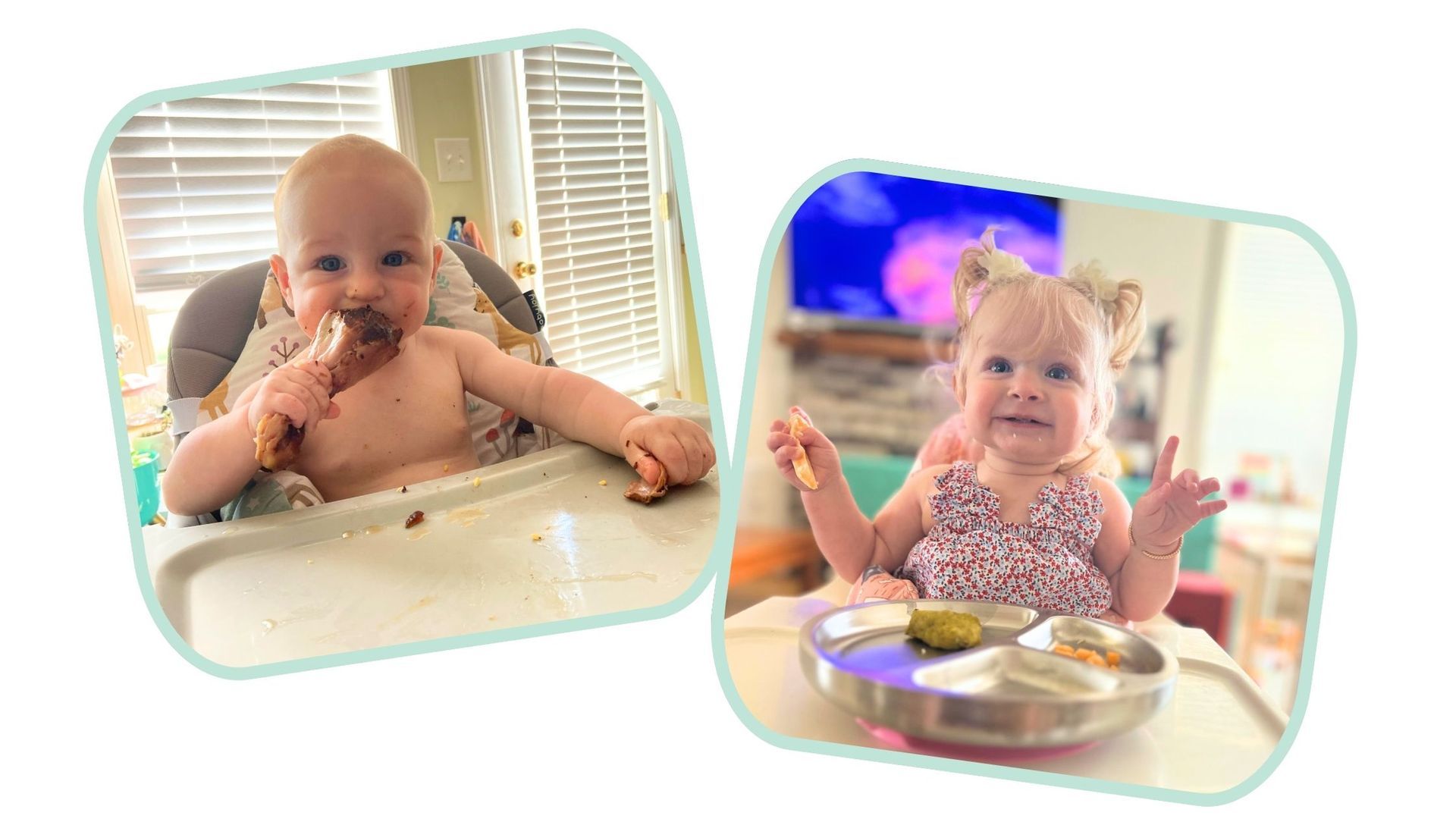
The FDA’s “Big Nine” Food Allergens
The FDA identifies the “Big Nine” as the most common food allergens responsible for allergic reactions in both children and adults. These allergens are required to be clearly labeled on packaged foods.
The Big Nine food allergens include:
- Milk
- Eggs
- Fish
- Shellfish (such as shrimp, crab, and lobster)
- Tree nuts (walnuts, almonds, cashews)
- Peanuts
- Wheat
- Soybeans
- Sesame
When Can Babies Start Eating Allergens?
Most babies are ready to begin solids and allergen introduction around 6 months of age.
Signs Your Baby Is Ready for Solids
Your baby may be ready if they can:
- Hold their head up with good control
- Sit mostly unassisted
- Bring objects to their mouth independently
- Show interest in food others are eating
If these milestones are present, allergen introduction can begin alongside other solid foods.
Is It Safe to Introduce Allergens to Babies?
For most babies, yes—with proper preparation and guidance.
Important Disclaimer
Always check with your pediatrician before making any changes to your baby’s diet, especially if there is a family history of allergies. Make sure all foods are prepared and served safely according to your pediatrician or feeding therapist’s guidance. Use age-appropriate textures to reduce the risk of choking.
How to Introduce Allergens to Your Baby Safely
Introducing allergens doesn’t have to be complicated. Following a simple, consistent approach can help parents feel confident.
General Rules for Introducing Allergenic Foods:
- Introduce one allergen at a time
Avoid offering other new foods so reactions are easier to identify. - Offer allergens earlier in the day
This allows time to monitor for any reactions. - Offer the allergen for three consecutive days
- Day 1: Start with a very small amount (about ¼ teaspoon)
- Days 2–3: Gradually increase the amount
Some allergic reactions require more than one exposure. - Maintain regular exposure
Once tolerated, continue offering the allergen a few times per week to help maintain tolerance.
What to Do After Your Baby Tolerates an Allergen
If your baby shows no signs of an allergic reaction, consistency is key. Continued exposure helps build familiarity and may support long-term tolerance. Allergens don’t need to be offered daily—but they should remain a regular part of your baby’s diet.
We're Here to help!
Starting solids and introducing allergens can raise questions and challenges. If your baby is struggling with
textures,
transitions, or
feeding skills, professional support can help.
Hogg Therapy’s Feeding Team provides pediatric feeding therapy and parent guidance to support families through every stage of feeding development, from first bites to confident eaters. Call
859-353-3666 to contact our Feeding Team, schedule a consultation, or learn more about our services.




![We’ve loved seeing your stories roll in over the past couple weeks and wanted to share one of our own, thanks to therapists Lauren & Maya and their friend Tiffany. ❤️
Last week, OT Ms. Lauren and ST Ms. Maya accompanied Tiffany on a HUGE adventure, attending the Special Needs Camp of Kentucky for activities, friendship, and growth ? Headquartered in Bath County, SNCKI is free to attend, with nearly 100 campers enrolled this year! Ms. Lauren shared her thoughts with the HTP team when she got home: “The other campers welcomed [Tiffany] with open arms, and she made so many new friends…A space where 76 teens/adults with disabilities of all kinds were free to just be them and make those connections with each other while having tons of fun. We have had moments that were trickier to navigate, but we did it together.”
One of the nights was family and community night, featuring a group dance and a talent showcase. ?Lauren said, “The amount of love and support in the gym was out of this world. For her mom to see that, to know that we’ve got her girl no matter what, means more than any treatment code or note I could ever write. She is already asking when she gets to come back…and even told her mom to ‘buy a new house at camp’? If you are not already, follow Special Needs Connections of Kentucky, Inc on facebook. They are doing such AMAZING things for our community here and deserve so much support.” ? We couldn’t agree more!
Therapy isn’t about treatment codes, billable hours, documentation, or recertification. It’s about the meaningful moments and the love we pour into these children every single day. This is why Hogg Therapy exists—to give every child the opportunity to experience a meaningful, joyful life. ✨ Thank you, Lauren and Maya for your support both in and outside of the clinic and for sharing this story! ?](https://scontent-iad3-1.cdninstagram.com/v/t51.82787-15/747807719_18212073508337241_9129116297997701917_n.jpg?stp=dst-jpg_e35_tt6&_nc_cat=108&ccb=7-5&_nc_sid=18de74&efg=eyJlZmdfdGFnIjoiQ0FST1VTRUxfSVRFTS5iZXN0X2ltYWdlX3VybGdlbi5DMyJ9&_nc_ohc=3RrxK29DzoQQ7kNvwGvv_vD&_nc_oc=AdpYcP_cCWpsmDf_MnvrcY69z9VP9vYnRtddATo3ymYkrslZng9RS0_KXo37oVxpP64&_nc_zt=23&_nc_ht=scontent-iad3-1.cdninstagram.com&edm=ANo9K5cEAAAA&_nc_gid=auW17GBJNH88UF88Jlc_cw&_nc_tpa=Q5bMBQIpoTS7IPexaC59uKd7hV7lrbbIa8W_NQJqx4ivBIT6VUommPrTWIFNXpcCBpmDB7ldeQp_DXx7cw&oh=00_AQInN65r5Ee1lTG9VFC-Lmg9VTvnrZXuwu7jow-_YIPtQw&oe=6AA8F3CA)


![We’re sharing an occupational therapy success story from OT Mrs. Abby today! ? Meet Grayson! When he first started occupational therapy, everyday life felt hard. He was experiencing significant picky eating, struggled with daily routines and transitions, and had a difficult time managing big emotions.
Since then, Grayson has put in so much hard work. Through OT, he has built confidence, strengthened his self-regulation skills, and learned to take on new and challenging tasks with courage. Every small step has added up to something truly amazing! One of the biggest reasons for Grayson’s success has been the incredible partnership with his parents. They fully embraced therapy beyond the clinic by consistently practicing strategies at home through his Home Exercise Program (HEP). Their dedication, encouragement, and willingness to try new approaches have made all the difference.
Today, Grayson is trying new foods every week, navigating daily routines with greater independence, and enjoying more successful, joyful moments with his family. His growth is a wonderful reminder of what can happen when a determined child, committed caregivers, and a supportive therapy team work together.
?Congratulations, Grayson! We are so proud of everything you’ve accomplished, and we’re celebrating your amazing parents, too. Your hard work, perseverance, and teamwork are inspiring! ?
[This story & all photos shared with parent permission ??] #occupationaltherapy #hoggtherapypediatrics #hoggtherapy #feedingtherapy](https://scontent-iad6-1.cdninstagram.com/v/t51.82787-15/742695277_18211398901337241_3568386461214310976_n.jpg?stp=dst-jpg_e35_tt6&_nc_cat=100&ccb=7-5&_nc_sid=18de74&efg=eyJlZmdfdGFnIjoiQ0FST1VTRUxfSVRFTS5iZXN0X2ltYWdlX3VybGdlbi5DMyJ9&_nc_ohc=aAXzBwoPEZUQ7kNvwGikaxr&_nc_oc=Adp1xDv5cbku04_HVbQQw-9Rs5I2ZcUM2n0qKbV9P5d9Mlb2d5XowPsV3OYcqB-_5C4&_nc_zt=23&_nc_ht=scontent-iad6-1.cdninstagram.com&edm=ANo9K5cEAAAA&_nc_gid=auW17GBJNH88UF88Jlc_cw&_nc_tpa=Q5bMBQLUoN5BrYt2E0dvYDN60nzskepHXOKJ9hD5FrCOy-LdJLHioq8xN_CEGH25Gfd-BMG3q6PFUqhWlQ&oh=00_AQIOAAULMn-nuwo4I_ZfpGCJ_l_N79HkjH-LCTFIbHmbNQ&oe=6AA8D24E)