Part 3: Potty Training: Pelvic PT vs. OT…What does my child need?
By Hayden Migneault, DPT
Welcome to Part 3 of our series all about pediatric pelvic floor therapy! This series will help parents better understand pediatric pelvic floor therapy and potty training support options for children. In Part 1, PT Mrs. Hayden tackled what pelvic floor therapy is and when it might be needed. Part 2 covered about what the next steps look like if you think your child might need pelvic floor therapy. In the final post, Mrs. Hayden is going to talk all about where occupational and/or physical therapy might help when it comes to potty training.
Potty Training can be an exciting time of independence, but it can also be an overwhelming time. While many kids learn with practice, some may need extra support. If you are having difficulties, therapies such as occupational and physical therapy may be able to help you and your child.
What is the Difference?
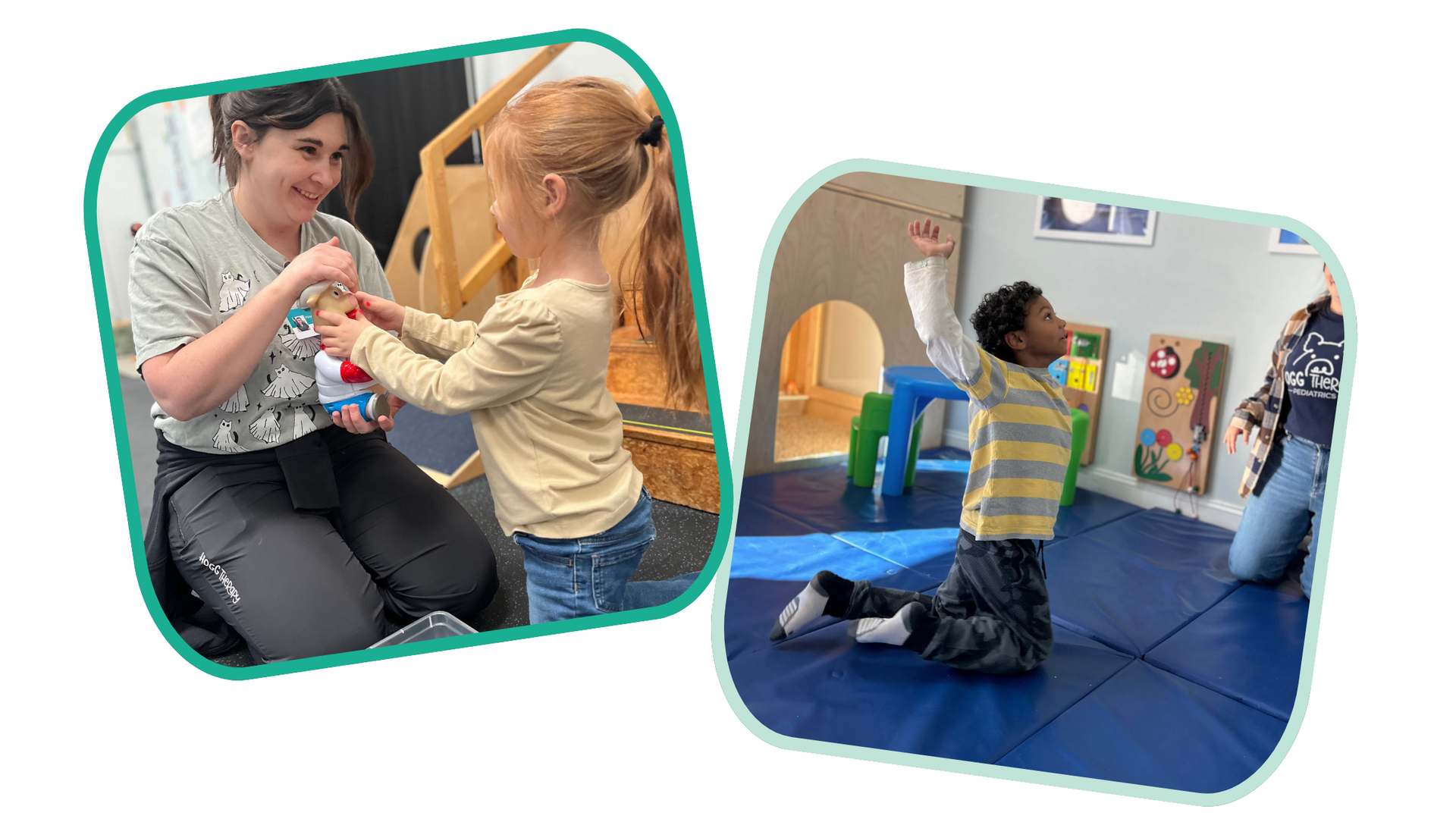
Occupational Therapy (OT)
This therapy will focus on helping children with daily routines and skills. OT is a great fit if your child understands the idea of using the toilet but struggles with the
routine, behavior, or sensory side of things.
Pelvic Physical Therapy (Pelvic PT)
This therapy focuses more on the
body and muscles, especially how they work together. PT is a better fit if your child is having trouble with the
physical process of peeing or pooping.

Could my child need both?
Sometimes toileting challenges are not just about behavior or the body—they are a mix of both. In these cases, children often benefit most from working with both OT and PT. Here are some common real-life examples to help you understand when both may be helpful.
Holding All Day
- OT: Fear of bathrooms, avoiding routines
- PT: Constipation, trouble relaxing muscles
Frequent Accidents
- OT: Doesn’t notice body signals
- PT: Trouble holding or controlling muscles
Afraid to Poop
- OT: Anxiety, fear from past pain
- PT: Constipation, painful bowel movements
Sits but Can’t Go
- OT: Trouble staying calm or focused
- PT: Poor muscle coordination or relaxation
Developmental Delays
- OT: Needs help with steps and routines
- PT: Needs help with posture and strength
In these cases, therapists often work together to support the child. Getting the right support can make potty training easier, less stressful, and more successful for everyone involved.
Every child’s potty training journey looks different, and sometimes extra support can make all the difference. Whether your child would benefit from occupational therapy, physical therapy, or a combination of both, the right team can help make toileting less stressful and more successful for the whole family.
If you have concerns about your child’s potty training progress, contact Hogg Therapy at
(859)353-3666 to learn more about scheduling an evaluation and finding the best fit for your child’s needs.