Seating for Success: Proper Positioning for Virtual Learning
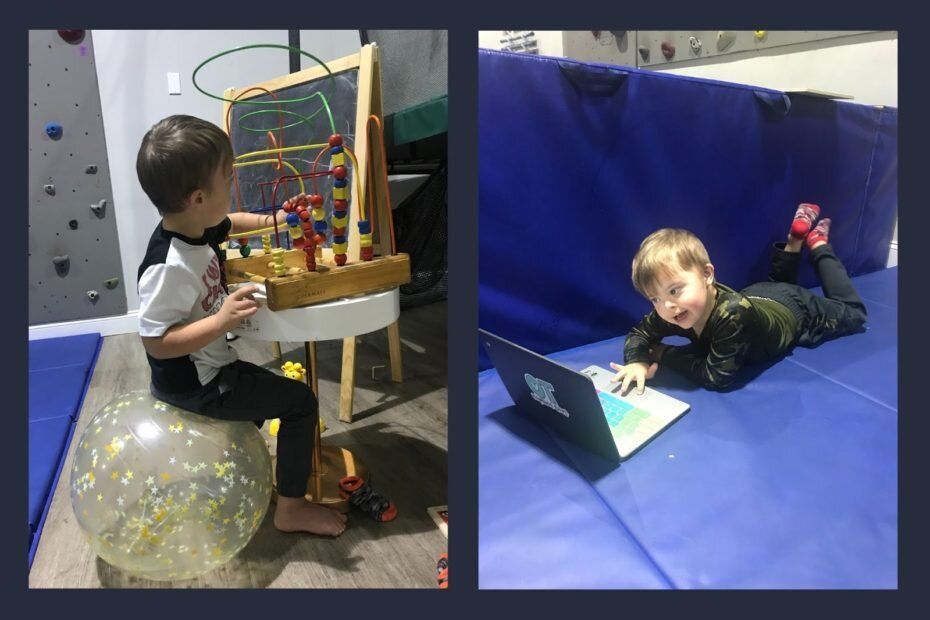
Although the COVID-19 pandemic will eventually end, distance learning and teletherapy are here to stay. If you have a child who uses either of these tools, you can set them up for success by providing them with appropriate positioning supports for sitting at a desk or table during virtual learning.
In order for our kids to have good use of their arms and hands to do things like writing, coloring, cutting, or typing, their arms need to be properly supported by their core, or trunk. When their trunk is weak, tired, or has inadequate positioning supports, it can be very difficult for them to use their arms and hands effectively. Either most of that energy goes toward maintaining their sitting posture with little energy left for using their arms, or poor positioning is preventing their arms from getting where they need to go.
So in order to promote our children’s fine motor skills and learning, we need to promote their posture through appropriate positioning:
- An easy tool to help you make sure your child is positioned properly at their desk is the “90-90-90” rule: the hips, knees, and ankles need to be positioned at 90-degree angles.
- You want to make sure your child’s computer screen is positioned at eye-level for them. If it is too low, it will cause your child to have to flex their neck to view the screen, putting a lot of pressure on their spine.
To help achieve your child’s positioning needs, you can use things around the house to serve as foot rests, risers for electronic devices, and comfortable but firm back support. My friend Mason has modeled some examples below!
Sitting in one position for a long time can be hard for kids! If your child needs a break from sitting in a chair, a couple of alternative seating options include sitting on an exercise ball or lying on the floor.
- Sitting on an exercise ball allows kids to receive much-needed sensory input from wiggling or lightly bouncing, and works to strengthen their core muscles at the same time. Win-win!
- Lying on their stomach to engage in virtual learning or school work allows kids to extend their neck and trunk muscles, providing a much-needed break from the flexion pattern that occurs when seated upright. This also works to strengthen their neck and trunk extensor muscles. Another win-win!
Thank you for taking the time to learn more about positioning your child for success during virtual learning. And thank you, Mason, for showing us how it’s done!
Check us out on Pinterest!






![We’ve loved seeing your stories roll in over the past couple weeks and wanted to share one of our own, thanks to therapists Lauren & Maya and their friend Tiffany. ❤️
Last week, OT Ms. Lauren and ST Ms. Maya accompanied Tiffany on a HUGE adventure, attending the Special Needs Camp of Kentucky for activities, friendship, and growth ? Headquartered in Bath County, SNCKI is free to attend, with nearly 100 campers enrolled this year! Ms. Lauren shared her thoughts with the HTP team when she got home: “The other campers welcomed [Tiffany] with open arms, and she made so many new friends…A space where 76 teens/adults with disabilities of all kinds were free to just be them and make those connections with each other while having tons of fun. We have had moments that were trickier to navigate, but we did it together.”
One of the nights was family and community night, featuring a group dance and a talent showcase. ?Lauren said, “The amount of love and support in the gym was out of this world. For her mom to see that, to know that we’ve got her girl no matter what, means more than any treatment code or note I could ever write. She is already asking when she gets to come back…and even told her mom to ‘buy a new house at camp’? If you are not already, follow Special Needs Connections of Kentucky, Inc on facebook. They are doing such AMAZING things for our community here and deserve so much support.” ? We couldn’t agree more!
Therapy isn’t about treatment codes, billable hours, documentation, or recertification. It’s about the meaningful moments and the love we pour into these children every single day. This is why Hogg Therapy exists—to give every child the opportunity to experience a meaningful, joyful life. ✨ Thank you, Lauren and Maya for your support both in and outside of the clinic and for sharing this story! ?](https://scontent-iad3-1.cdninstagram.com/v/t51.82787-15/747807719_18212073508337241_9129116297997701917_n.jpg?stp=dst-jpg_e35_tt6&_nc_cat=108&ccb=7-5&_nc_sid=18de74&efg=eyJlZmdfdGFnIjoiQ0FST1VTRUxfSVRFTS5iZXN0X2ltYWdlX3VybGdlbi5DMyJ9&_nc_ohc=WRbsbfCTSrsQ7kNvwFWMvLj&_nc_oc=AdqL_yFWMAbIKRPXq4s2bEE03J2NlRs9Ilrde9AYGi_cAhIQ6eZl9KIS4ru5ZKBApTc&_nc_zt=23&_nc_ht=scontent-iad3-1.cdninstagram.com&edm=ANo9K5cEAAAA&_nc_gid=LtnhllJCjzcldGTYsNvOKg&_nc_tpa=Q5bMBQIYJBTklPzbB7pGmio9C02xhYWaXXY59OUw74wbHMYsc2Dh0osZjvkUD6KmRYAk7-wbudCJ5SV69w&oh=00_AQLlTMuZZyVXDfjP7t6eyoQRzaT8843GCYQBTrXg4vXSOw&oe=6AAF530A)


![We’re sharing an occupational therapy success story from OT Mrs. Abby today! ? Meet Grayson! When he first started occupational therapy, everyday life felt hard. He was experiencing significant picky eating, struggled with daily routines and transitions, and had a difficult time managing big emotions.
Since then, Grayson has put in so much hard work. Through OT, he has built confidence, strengthened his self-regulation skills, and learned to take on new and challenging tasks with courage. Every small step has added up to something truly amazing! One of the biggest reasons for Grayson’s success has been the incredible partnership with his parents. They fully embraced therapy beyond the clinic by consistently practicing strategies at home through his Home Exercise Program (HEP). Their dedication, encouragement, and willingness to try new approaches have made all the difference.
Today, Grayson is trying new foods every week, navigating daily routines with greater independence, and enjoying more successful, joyful moments with his family. His growth is a wonderful reminder of what can happen when a determined child, committed caregivers, and a supportive therapy team work together.
?Congratulations, Grayson! We are so proud of everything you’ve accomplished, and we’re celebrating your amazing parents, too. Your hard work, perseverance, and teamwork are inspiring! ?
[This story & all photos shared with parent permission ??] #occupationaltherapy #hoggtherapypediatrics #hoggtherapy #feedingtherapy](https://scontent-iad6-1.cdninstagram.com/v/t51.82787-15/742695277_18211398901337241_3568386461214310976_n.jpg?stp=dst-jpg_e35_tt6&_nc_cat=100&ccb=7-5&_nc_sid=18de74&efg=eyJlZmdfdGFnIjoiQ0FST1VTRUxfSVRFTS5iZXN0X2ltYWdlX3VybGdlbi5DMyJ9&_nc_ohc=wvCncwGtmFwQ7kNvwFQz9M-&_nc_oc=AdozdkeiuRh2cHjw3c3NprUIKFQdaQpvWe6i9mHI6txX-XOsoC1kHLg3FLMy5S6FODU&_nc_zt=23&_nc_ht=scontent-iad6-1.cdninstagram.com&edm=ANo9K5cEAAAA&_nc_gid=LtnhllJCjzcldGTYsNvOKg&_nc_tpa=Q5bMBQKd9IFZGAwMDbLfKj6WQssoxZh1kmht6u4vsXu-r_KN8HNsFPcBMpZs7JKNbGmmhiUQvWYzAIxClQ&oh=00_AQIAsCBGmfgiLZIYm0RoMThlAQT1BjtcRAbam0OpAIDRUw&oe=6AAF69CE)