Play Skills From 0-3 Years
Playing is important for your child's development. But it doesn't always have to be super involved. Here's a brief overview of early developmental play skills.
Janna Lopez, MS, OTR/L
The job of a child is to play- so it makes sense that they learn about the world around them through play. The role of play is very important in child development, especially for the improvement of gross motor, fine motor and social skills. Play doesn’t always have to be involved- it can be as simple as imitating the sounds that your infant makes or playing clapping games. It can also be more involved, like stacking blocks to imitate designs, and completing more difficult puzzles.
To help your child fully reach their potential, it is important to have an understanding of basic play development. This knowledge will be helpful when playing with your child to encourage and offer them appropriate challenges and opportunities that match their skill sets.
Below you will find a brief overview of early developmental play skills. As always, children develop on their own timelines, so your child may differ from these age ranges.
- 4-6 months: Your child will begin to show interest in and curiosity about the environment, including sustained eye contact and visual tracking. YOU will be their favorite toy! Close interaction with your child is very important at this age!
- 10 months to 1 year: Your child may begin pointing to objects, and object permanence (the knowledge that items remain present when they are out of sight) will emerge.
- 1 year to 15 months: Solitary play skills and imitation will emerge. Child may begin wanting to play near peers, and games such as ‘chase’ or ‘Ring Around the Rosie’ are popular.
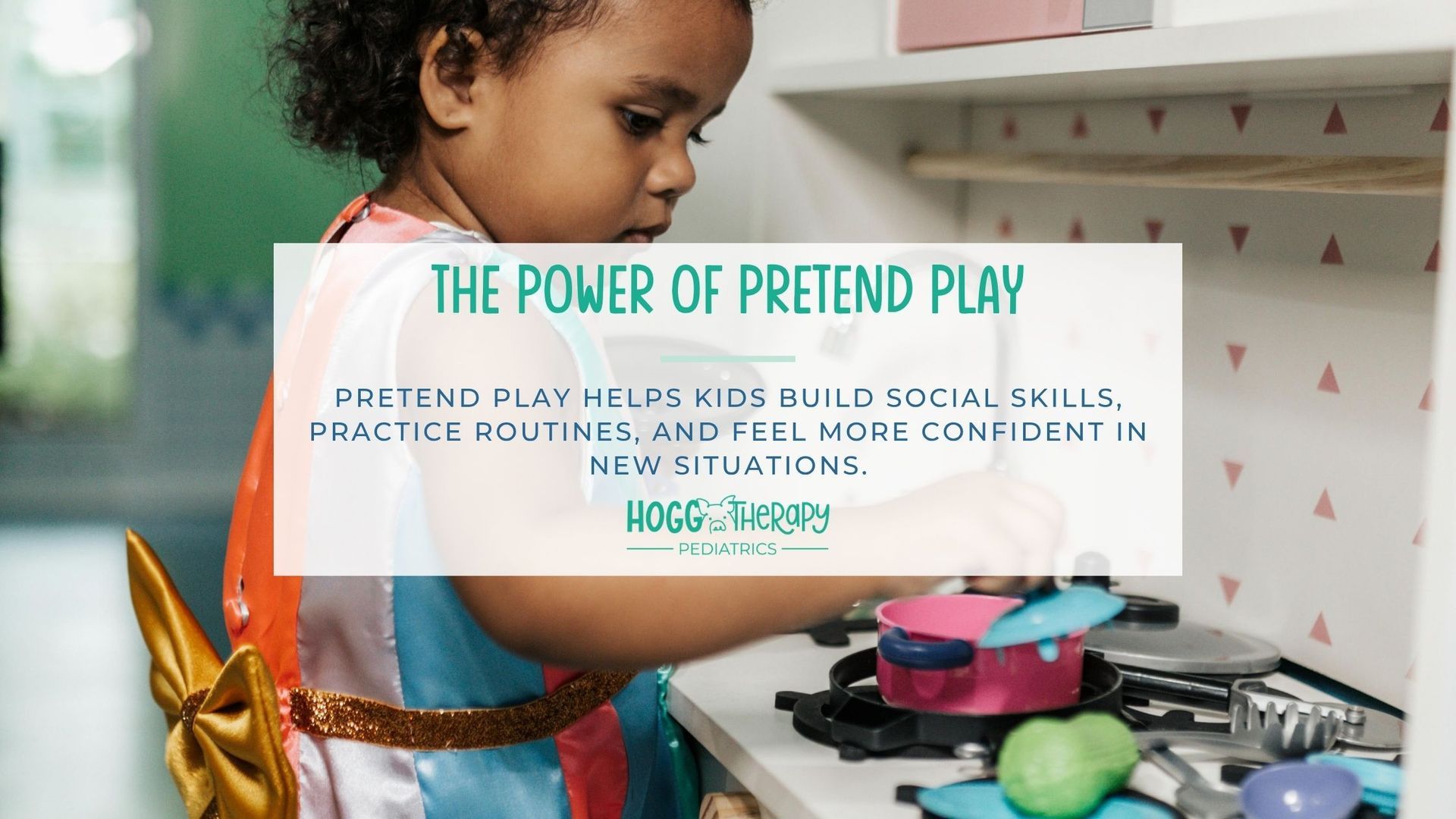
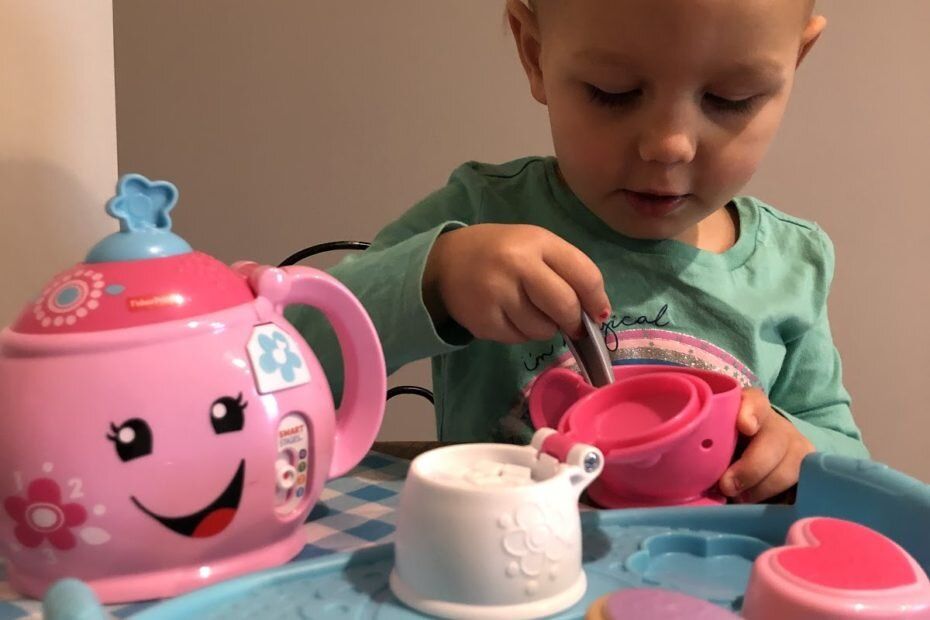
- 2 years: Parallel play and symbolic play begin to strengthen. Your child will likely begin wanting to play ‘pretend’ with you, including playing house, doctor, and school! Children enjoy pretend play with lots of props, so toy dolls and bottles, pots and pans, or trucks and cars are popular toys.
- 2 ½ to 3 years: Turn taking begins to emerge as children improve their interactive play skills. Problem solving is also beginning to improve, so pop beads, chunky puzzles, and crayons are a must at this age!
Check us out on Pinterest!